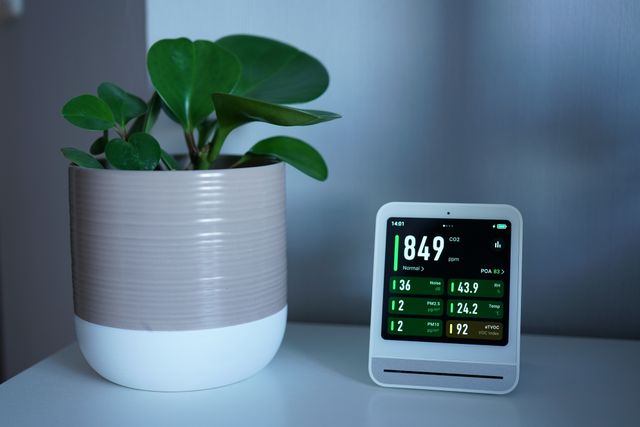
Indoor air quality rarely gets the same attention as roofing, plumbing or electrical systems, yet it plays a significant role in the comfort and health of a home. With more homeowners becoming aware of pollutants that can build up indoors, air quality sensors have become increasingly popular. But are they genuinely worth the investment, or are they simply another smart home gadget?
The answer depends on the home, the occupants and what problems are already present.
🌿 What Exactly Do Air Quality Sensors Measure?
Most modern air quality sensors monitor one or more of the following:
- Particulate matter (PM2.5 and PM10) from dust, smoke and pollen
- Volatile Organic Compounds (VOCs) released from paints, furniture, cleaning products and flooring
- Carbon dioxide (CO₂) levels that can indicate poor ventilation
- Humidity and temperature, both of which influence comfort and mold growth
Higher-end models may also monitor additional pollutants, providing a broader picture of indoor conditions.
👍 Where Air Quality Sensors Really Shine
One of the biggest advantages is awareness.
Many indoor air problems have no obvious warning signs. A home can look spotless while airborne particles or elevated VOC levels remain hidden. A sensor helps identify changes before they become noticeable.
They can also help homeowners:
✔ Spot ventilation problems
✔ Detect excessive humidity before mold develops
✔ Confirm whether air purifiers are making a measurable difference
✔ Understand how cooking, candles, fireplaces or household cleaners affect indoor air
Rather than relying on guesswork, homeowners can make informed decisions based on real data.
⚠️ The Limitations That Matter
Air quality sensors are useful tools, but they are not miracle devices.
A sensor cannot remove pollutants—it only reports them. If poor air quality is detected, the solution may involve improving ventilation, servicing the HVAC system, replacing filters, reducing indoor pollution sources or addressing moisture issues.
It’s also important to understand that consumer-grade sensors vary in accuracy. Premium models generally provide more reliable readings than budget versions, particularly when measuring fine particles or VOCs.
🏡 Which Homes Benefit the Most?
Some properties gain more value from air monitoring than others.
Air quality sensors are particularly worthwhile if a home has:
- Recent renovations or new flooring
- Occupants with allergies or asthma
- Pets
- A gas fireplace or gas appliances
- High humidity levels
- Older HVAC equipment
- Poor natural ventilation
In these situations, the information collected can help identify trends that might otherwise go unnoticed.
💰 Are They Worth the Cost?
For many homeowners, the answer is yes—but with realistic expectations.
A quality sensor should be viewed as a monitoring tool rather than a complete solution. Spending money on an accurate device often makes more sense than repeatedly guessing at the cause of stale air, excessive dust or recurring humidity issues.
When paired with routine HVAC maintenance, quality filters and good ventilation practices, an air quality sensor becomes part of a practical approach to maintaining a healthier home.
Final Thoughts
No single device can guarantee perfect indoor air quality, but having reliable information is always valuable. Air quality sensors provide homeowners with insight into conditions that cannot be seen or smelled, making it easier to respond before minor issues become larger concerns.
While they are not essential for every household, they can be a worthwhile investment for anyone looking to better understand the environment inside their home. Like many aspects of home maintenance, the best decisions are based on evidence rather than assumptions—and that’s exactly where a good air quality sensor earns its place.
Recent Comments