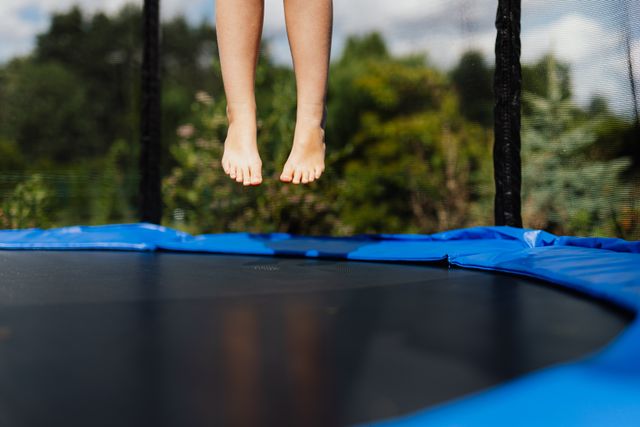
There is something wonderfully simple about a backyard trampoline. Kids see a place to jump, play, and burn off energy. Adults, however, should see something else, too: a piece of recreational equipment that needs a little planning, regular attention, and sensible rules.
The good news? Trampoline safety does not have to be complicated. A few practical checks can go a long way toward reducing the chances of an accident.
Start With the Right Location
Where a trampoline sits matters almost as much as the trampoline itself. Choose a level area with plenty of open space around it. Keep it well away from fences, trees, sheds, decks, pools, play structures, and other hard or hazardous surfaces.
Look overhead, too. Low branches and utility lines are obvious concerns, but even seemingly harmless obstacles can become a problem when someone is bouncing several feet in the air.
A soft, reasonably clear area is preferable to concrete, asphalt, or another hard surface.
Check the Trampoline Before It Gets Busy
A trampoline should not be a “set it and forget it” item. Before use, take a quick look at the frame, springs, jumping mat, enclosure, padding, and support legs.
Watch for bent or damaged metal, loose connections, worn stitching, tears, missing padding, or deteriorated parts. Weather can be tough on outdoor equipment, and damage that looks minor at first can become a bigger safety issue.
The enclosure deserves particular attention. A safety net is useful only when it is properly installed, securely attached, and in good condition.
Establish Simple Rules
Most trampoline rules are refreshingly straightforward:
- One jumper at a time is the safest approach.
- No flips or other advanced maneuvers unless properly trained and supervised.
- Keep shoes, toys, and other objects off the jumping surface.
- Never use a trampoline when it is wet, icy, or otherwise slippery.
- Children should be supervised according to their age, size, skill level, and the equipment manufacturer’s guidance.
Posting the rules where everyone can see them can help turn good intentions into consistent habits.
Do Not Skip the Manufacturer’s Instructions
Every trampoline is a little different, so the owner’s manual matters. Follow the manufacturer’s instructions for assembly, anchoring, weight limits, inspections, maintenance, and replacement parts.
Anchoring is especially important in areas where strong winds or severe weather are possible. A trampoline that moves or overturns can create hazards well beyond the jumping surface.
A Few Minutes of Maintenance Can Pay Off
Make trampoline safety part of the regular backyard routine. Check it after severe weather and periodically during the season. Clear away debris, inspect the structure, and address problems promptly rather than waiting for the next opportunity.
A trampoline can be a great addition to a yard. The safest setup is one that combines appropriate placement, sound equipment, sensible rules, active supervision, and regular maintenance. In other words, a little attention on the ground can help keep the fun where it belongs: safely in the air.
Recent Comments